
Author name: puretatva_2025

Which mustard oil is best for cooking
Mustard Oil

Which Mustard Oil Is Best for Cooking?

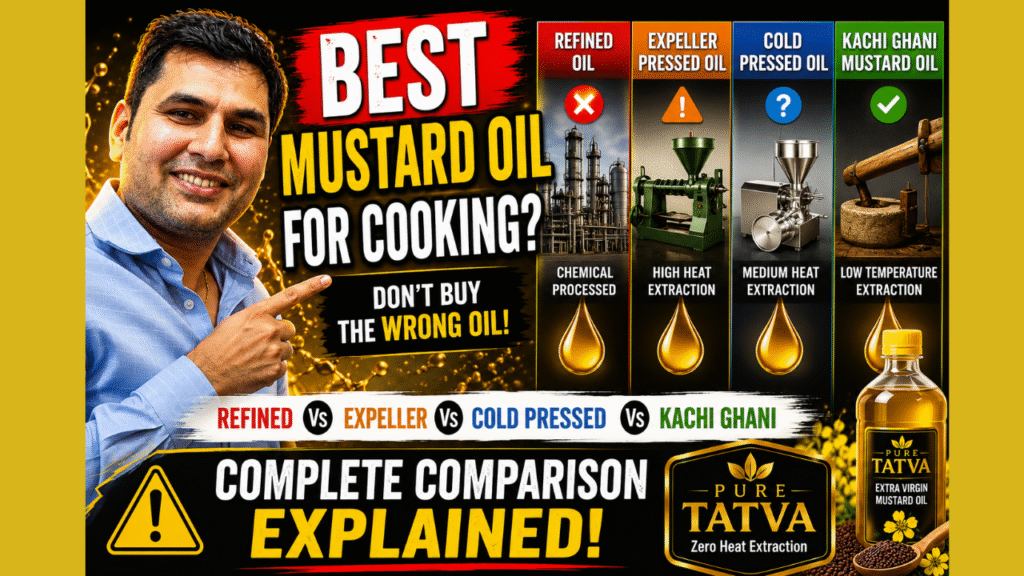
The best mustard oil for cooking is one that is 100% pure, gently extracted without excessive heat, rich in naturally occurring vitamin E, antioxidants and unsaturated fatty acids, and free from adulteration. Extraction method plays a bigger role in quality than brand name or pungency alone. Which Mustard Oil Is Best for Cooking? If you ask me just one question about cooking oil, it’s usually this: “Which mustard oil is best for cooking?” My answer is always the same. The best mustard oil isn’t the one with the biggest brand name. It isn’t the one that burns your eyes. It isn’t the one with the strongest smell. The best mustard oil is the one that preserves the natural nutrition of the mustard seed. That means choosing an oil that naturally retains: Most people never think about how the oil was extracted. But that’s exactly where the real difference begins. What Makes a Mustard Oil Good for Cooking? A good cooking oil should do more than simply survive high temperatures. It should also preserve the natural goodness present inside the seed. When mustard oil is extracted gently, many naturally occurring nutrients remain better preserved. These include: These nutrients contribute to both flavour and nutritional quality. Does Strong Pungency Mean Better Mustard Oil? This is probably the biggest misconception in the Indian market. Many consumers believe: More pungency = More purity Unfortunately, it isn’t that simple. A strong smell or eye-watering sensation does not automatically prove that an oil is of higher quality. To understand why, we first need to understand the science behind mustard oil. Why Does Mustard Oil Become Pungent? Mustard seeds naturally contain compounds that can produce the familiar sharp aroma associated with traditional mustard oil. During many conventional extraction methods, water is introduced into the extraction process. This allows naturally occurring reactions inside the seed that generate the characteristic pungency people associate with mustard oil. Traditional methods such as: generally depend on moisture during processing. Over time, consumers began linking this pungency with purity. But these are not the same thing. Pungency is a characteristic. Purity is a quality standard. Can Fake Mustard Oil Smell Like Real Mustard Oil? Unfortunately, yes. Food adulteration has become increasingly sophisticated. Some adulterated products may use artificial flavouring compounds that imitate the characteristic aroma of mustard oil. As a result, a bottle may: while not offering the same nutritional profile as genuine mustard oil. This is one reason why smell alone should never be used as a test for purity. Why Extraction Method Matters More Than Brand Name When consumers compare mustard oils, they usually compare brands. A better comparison is: How was the oil extracted? Extraction determines how much of the seed’s natural nutrition is preserved. Excessive heat generated during processing can reduce heat-sensitive nutrients such as vitamin E and certain antioxidant compounds. Gentler extraction helps preserve the oil’s original nutritional character. The extraction method matters just as much as the seed itself. How Pure Tatva Extracts Virgin Mustard Oil At Pure Tatva, we believe the seed already contains everything nature intended. Our responsibility is to preserve it. Our process includes: Premium Mustard Seed Selection Only carefully selected mustard seeds are chosen. Moisture Optimization Excess moisture is reduced before extraction rather than adding extra water during processing. Zero Heat Press Extraction Our Virgin Zero Heat Press System extracts oil at room temperature without exposing it to excessive heat. The oil is extracted gently—almost like juice from the seed. Gentle Filtration The oil is filtered carefully using a positive pressure filtration process designed to preserve its natural integrity. The objective is simple: Protect the nutrients instead of damaging them.Why Zero Heat Extraction Makes a Difference When oil is extracted gently, it helps preserve: Because no additional water is introduced during extraction, the oil also retains its own natural characteristics rather than depending on processing reactions. This results in a clean-tasting virgin mustard oil suitable for everyday cooking. Many consumers also report that its lighter consistency allows them to use less oil during cooking compared to conventional oils. Why Zero Heat Extraction Makes a Difference When oil is extracted gently, it helps preserve: Because no additional water is introduced during extraction, the oil also retains its own natural characteristics rather than depending on processing reactions. This results in a clean-tasting virgin mustard oil suitable for everyday cooking. Many consumers also report that its lighter consistency allows them to use less oil during cooking compared to conventional oils. How to Choose the Best Mustard Oil for Cooking Before buying mustard oil, ask these questions: Is it genuinely 100% mustard oil? Purity should always come first. How was it extracted? Choose oils extracted through gentle processes that avoid excessive heat. Does the manufacturer explain the process? Transparency is one of the strongest indicators of quality. Are you judging only by smell? A strong aroma does not automatically guarantee purity. Always look beyond pungency. Final Verdict So… Which mustard oil is best for cooking? The answer isn’t based on branding. It isn’t based on pungency. It isn’t based on eye-watering sharpness. The best mustard oil is one that preserves the seed’s natural nutrition through careful extraction while maintaining purity from seed to bottle. At Pure Tatva, that’s exactly what our Virgin Zero Heat Press Extraction System is designed to achieve. Because great cooking doesn’t begin in the kitchen. It begins with choosing the right oil. Frequently Asked Questions Which mustard oil is best for cooking? The best mustard oil for cooking is one that is pure, minimally processed, gently extracted without excessive heat and rich in naturally occurring vitamin E, antioxidants and unsaturated fats. Does pungency indicate pure mustard oil? Not necessarily. Pungency is a natural characteristic influenced by the extraction process and should not be considered the only indicator of purity. Why is extraction method important? Extraction determines how well naturally occurring nutrients such as vitamin E, antioxidants and healthy fats are preserved. Is zero heat extraction better than conventional extraction? Gentle extraction methods

Mustard oil benefits
Mustard Oil

Mustard Oil Benefits: The Truth Most People Never Hear

Summary Mustard oil offers several potential health benefits when it is 100% pure and gently extracted. It naturally contains a high proportion of unsaturated fats, omega fatty acids, vitamin E and antioxidants that support heart health, cholesterol management, skin health and overall wellness. However, excessive heat during extraction or adulteration with cheaper oils and chemicals can reduce these natural benefits. Mustard Oil Benefits: The Truth Most People Never Hear “You won’t believe how many health benefits have been associated with mustard oil.” People often hear that mustard oil is good for the heart. It helps manage cholesterol. It supports healthy cooking. It contains good fats. Yet there is one question that keeps bothering millions of Indians. If mustard oil is really so beneficial, why are lifestyle diseases still increasing even in households that have used mustard oil for generations? The answer is more complicated than most people think. The problem may not be mustard oil itself. The real difference lies in purity, extraction method and adulteration. Let’s understand the science. Why Mustard Oil Is Considered Healthy Pure mustard oil is naturally rich in several nutrients that make it different from many highly processed cooking oils. Its nutritional profile includes: Together, these nutrients contribute to the health benefits that mustard oil is known for. 1. Supports Healthy Cholesterol Levels One of the biggest reasons nutrition experts appreciate pure mustard oil is its fatty acid profile. Mustard oil contains a naturally balanced combination of monounsaturated and polyunsaturated fats. These healthy fats help support a favourable balance between LDL (bad cholesterol) and HDL (good cholesterol) as part of an overall healthy diet. Maintaining this balance contributes to long-term cardiovascular health. 2. May Support Heart Health Your heart depends on healthy blood vessels, balanced cholesterol levels and healthy dietary fats. Because mustard oil naturally contains a high proportion of unsaturated fats, it is often preferred over many heavily processed cooking oils. Replacing saturated fats with unsaturated fats, where appropriate, is widely recognised as part of a heart-conscious dietary pattern. 3. The Connection Between Mustard Oil and Blood Sugar Many people are surprised to hear mustard oil discussed alongside blood sugar management. Here’s why. Scientific studies suggest that healthy unsaturated fats may help improve insulin sensitivity. Research has also explored how these fats may influence glucose transporter proteins involved in moving glucose from the bloodstream into body cells. Omega-3 fatty acids present in mustard oil are also associated with reducing cellular inflammation and oxidative stress, both of which play important roles in metabolic health. This doesn’t make mustard oil a treatment for diabetes. Instead, it highlights how choosing healthier dietary fats can support overall metabolic wellness when combined with a balanced lifestyle. 4. Rich in Vitamin E and Natural Antioxidants Naturally extracted mustard oil contains vitamin E along with antioxidant compounds. These nutrients help protect cells from oxidative stress. When applied externally, mustard oil has traditionally been used for: These traditional uses continue to remain popular across Indian households. 5. Traditionally Used for Massage For generations, mustard oil has been used for body massage. People commonly use it for: While these are traditional practices, individuals should consult healthcare professionals for medical conditions. 6. Supports Digestive Wellness According to traditional Indian dietary practices, mustard oil stimulates digestive fire (Agni). A healthy digestive system plays an important role in nutrient absorption and overall wellbeing. Although modern nutrition and Ayurveda explain digestion differently, both recognise the importance of healthy dietary fats. Then Why Aren’t People Getting These Benefits? This is perhaps the most important question. If mustard oil contains all these beneficial nutrients… why aren’t more people experiencing the expected health benefits? There are two major reasons. Reason 1: High Extraction Temperature Many consumers assume that every cold-pressed oil is extracted without heat. Unfortunately, that’s not always true. During conventional pressing, friction inside the machine can significantly increase oil temperature. As temperature rises, heat-sensitive nutrients like vitamin E and certain antioxidants may decline. This doesn’t necessarily make the oil unsafe. However, it can reduce some of its naturally occurring nutritional value. Extraction method matters far more than most consumers realise. Reason 2: Adulteration Another major concern is adulteration. Products sold as mustard oil may sometimes contain: When adulteration occurs, consumers no longer receive the nutritional profile they expect from genuine mustard oil. This is one reason why purity should always be the first priority. Why Pure Tatva Uses Zero Heat Virgin Extraction At Pure Tatva, our objective is simple. Protect the natural goodness of mustard seeds instead of damaging it during extraction. Our process includes: Premium Seed Selection Only carefully selected mustard seeds are used. Moisture Optimization Seeds are brought to an optimal moisture level before extraction. Zero Heat Press Extraction The oil is extracted at room temperature without exposing it to excessive heat. Gentle Filtration The oil is filtered carefully using a positive pressure filtration system without aggressive processing. The result is a naturally extracted virgin mustard oil that preserves its authentic nutritional profile, aroma and taste. Why Consumers Notice the Difference Because the oil remains naturally extracted: The focus is not simply on making mustard oil. The focus is preserving mustard oil the way nature intended. Final Thoughts Mustard oil has earned its reputation over centuries. Its benefits are supported by its naturally balanced fatty acid profile, vitamin E, antioxidants and traditional use. But these benefits depend on one crucial factor. Purity If extraction damages the nutrients or adulteration changes what’s inside the bottle, consumers may never experience the real advantages of mustard oil. The question is no longer, “Does mustard oil have benefits?” The better question is, “Is the mustard oil I’m buying genuinely pure?” That answer makes all the difference. Frequently Asked Questions What are the main benefits of mustard oil? Pure mustard oil naturally contains unsaturated fats, omega fatty acids, vitamin E and antioxidants that support heart health, cholesterol balance and overall wellness. Is mustard oil good for cholesterol? When consumed as part of a balanced diet, pure mustard oil’s unsaturated fats

Is Mustard Oil Healthy
Mustard Oil

Is Mustard Oil Healthy? The Truth That Most People Don’t Know

Summary Yes, mustard oil can be a healthy cooking oil—but only when it is 100% pure and naturally extracted. The real concern is not mustard oil itself but adulteration with cheaper oils and harmful chemicals such as artificial allyl isothiocyanate and banned colours. Pure virgin mustard oil extracted without heat retains its natural fatty acid profile and is considered a more balanced cooking oil than many heavily processed alternatives. “Is mustard oil healthy?“ This is probably the most common question people ask me. Many people immediately say, “Didn’t you watch the news? Isn’t mustard oil harmful?” My answer surprises them. The real question isn’t whether mustard oil is healthy. The real question is: Is the bottle actually filled with pure mustard oil? Because today’s market is full of products sold in the name of mustard oil that may contain cheaper oils, artificial chemicals and adulterants. And unfortunately… The real villain often hides inside the bottle while genuine mustard oil gets blamed. Why Has Mustard Oil Developed a Bad Reputation? If you regularly read newspapers or browse health news online, you’ve probably come across reports discussing adulteration in edible oils. Several reports over the years have highlighted concerns about edible oils being mixed with cheaper oils or artificial additives. This has created confusion among consumers. Instead of questioning what’s inside the bottle, many people simply start believing that mustard oil itself is unhealthy. But that’s like blaming an honest person for someone else’s crime. The problem is often adulteration, not authentic mustard oil. The Real Problem: Adulteration, Not Mustard Oil Many adulterated products sold as mustard oil may contain ingredients that do not naturally belong there. These may include: When these substances replace genuine mustard oil, consumers lose the nutritional benefits they expected. Instead, they unknowingly consume an inferior product. How Artificial Chemicals Can Mislead Consumers One reason people associate strong smell and pungency with purity is because genuine mustard oil naturally contains compounds responsible for its characteristic aroma. However, food adulteration has become increasingly sophisticated. Some manufacturers may attempt to imitate these natural characteristics using artificial flavouring compounds instead of preserving the oil’s natural quality. As a result, the bottle smells like mustard oil, looks like mustard oil, but may not actually deliver the nutritional profile of genuine virgin mustard oil. The Hero Isn’t the Problem Imagine watching a movie where the hero gets blamed while the real criminal escapes unnoticed. That’s exactly what’s happening with mustard oil. Consumers often hear, “Mustard oil isn’t healthy.” But the better question is: Was it actually pure mustard oil? Because authentic mustard oil and adulterated oil are two completely different products. What Makes Pure Mustard Oil Different? When mustard seeds are processed carefully without excessive heat, much of their naturally occurring nutritional profile is preserved. A high-quality virgin mustard oil naturally contains a balanced combination of: This balance is one reason many nutrition-conscious consumers continue to choose authentic mustard oil for everyday cooking. Why Extraction Method Matters The quality of mustard oil depends not only on the seed but also on how it is extracted. Excessive heat during processing can affect the oil’s natural characteristics. At Pure Tatva, we use our Virgin Zero Heat Press Extraction System, a process designed to extract oil without exposing it to high temperatures. Unlike conventional processing methods, our focus is to preserve the oil’s natural integrity as much as possible. The result is a naturally extracted virgin mustard oil that retains its authentic aroma, taste and nutritional balance. Benefits of Choosing Genuine Virgin Mustard Oil When the oil is genuinely pure and naturally extracted, it offers several advantages: The key is purity, not marketing claims. How to Choose a Healthy Mustard Oil Before buying mustard oil, ask these important questions: Is it genuinely 100% mustard oil? Always check whether the product clearly mentions purity. How was it extracted? Prefer naturally extracted virgin oils over heavily processed alternatives. Is the manufacturer transparent? Trust brands that openly explain their extraction process. Does the company focus on quality instead of only pricing? Cheap oils often become cheap for a reason. Final Thoughts So next time someone asks, “Is mustard oil healthy?” Don’t answer immediately. Instead ask, “Is the bottle actually filled with pure virgin mustard oil?” Because the real issue isn’t mustard oil. The real issue is what some bottles contain in the name of mustard oil. Choose purity. Choose transparency. Choose naturally extracted mustard oil. Because when your cooking oil is genuine, every meal begins with a healthier foundation. Frequently Asked Questions Is mustard oil healthy? Yes, pure mustard oil can be a healthy cooking oil because it naturally contains a balanced combination of monounsaturated and polyunsaturated fats. However, its quality depends on purity and extraction method. Why do some people say mustard oil is unhealthy? Many concerns arise due to adulteration. Products sold as mustard oil may sometimes contain cheaper oils or artificial additives, which can create confusion and damage mustard oil’s reputation. What is adulterated mustard oil? Adulterated mustard oil is a product that has been mixed with cheaper oils, artificial flavouring compounds, colours or other substances while being sold as pure mustard oil. Does extraction method affect mustard oil quality? Yes. Gentle extraction methods that avoid excessive heat help preserve the oil’s natural flavour, aroma and nutritional profile better than aggressive processing methods. How can I identify pure mustard oil? Choose brands that clearly explain their sourcing, purity standards and extraction method. Transparency is one of the strongest indicators of quality. Is virgin mustard oil better than heavily processed mustard oil? Virgin mustard oil is generally preferred because it undergoes minimal processing, helping preserve its natural characteristics and authentic nutritional profile. Key Takeaways Disclaimer: This article is intended for educational purposes only. It does not diagnose, treat or prevent any disease. Individual nutritional needs may vary. Always consult a qualified healthcare professional for personalised dietary advice.

Mustard Oil

Is Mustard Oil Healthy? The Truth About Purity, Extraction & Nutrition

Quick Summary Yes, mustard oil can be a healthy cooking oil when it is pure and extracted carefully. The real question is not whether mustard oil is healthy, but whether the oil inside the bottle is genuine, free from unnecessary adulteration, and processed in a way that preserves its natural nutritional qualities. Purity, quality of seeds, and extraction method all play an important role in determining the final quality of mustard oil. Why Has Mustard Oil Become So Controversial? Walk into any Indian kitchen and you will likely find mustard oil. It has been used for generations and remains one of the most popular cooking oils in many parts of the country. Yet today, many people ask: “Is mustard oil healthy?” Interestingly, the question itself may not be the right place to start. Imagine spending time with someone who has a bad reputation. Even if you have done nothing wrong, people may begin to associate you with that reputation. Something similar can happen with food products. When consumers come across reports of adulteration, poor-quality ingredients, artificial additives, or heavily processed products, the reputation of the entire category can suffer—even when genuine, high-quality products exist. The Real Question: What Is Actually Inside the Bottle? Many consumers focus only on the name printed on the label. However, a more important question is: What exactly is present inside the bottle? The quality of mustard oil can be influenced by several factors: Two bottles may both say “Mustard Oil” on the front, yet their quality can be very different. This is why evaluating the source and manufacturing process is often more important than judging the oil category itself. Why Extraction Method Matters One of the most overlooked aspects of edible oils is extraction temperature. Many consumers believe that if oil is extracted directly from seeds, it must automatically be the best option. However, the amount of heat generated during extraction can influence the final characteristics of the oil. Excessive heat during processing may affect certain naturally occurring compounds present in mustard seeds. This is why extraction technology has become an important consideration for health-conscious consumers. The goal is simple: Preserve as much of the oil’s natural character as possible while maintaining quality and stability. What Makes Mustard Oil Popular? Mustard oil has been used in Indian households for centuries because of its distinctive aroma, cooking performance, and traditional culinary value. It naturally contains a combination of: These properties make mustard oil a preferred choice for many traditional Indian recipes. Healthy Oil Is More Than Just a Name Many people make purchasing decisions based solely on the type of oil. However, healthy cooking depends on more than just choosing mustard oil, groundnut oil, sesame oil, or any other category. A quality cooking oil should ideally have: Purity The oil should come from authentic raw materials and follow proper quality standards. Responsible Processing The extraction method should focus on preserving the oil’s natural characteristics. Transparency Consumers should understand how the oil is produced and handled. Consistency The oil should deliver consistent quality from batch to batch. Why Pure Tatva Focuses on Extraction Quality At Pure Tatva, we believe that purity begins long before the oil reaches your kitchen. Our Virgin Extraction Process uses a Zero Heat Press System designed to minimize heat exposure during extraction. The objective is simple: To preserve the natural character, aroma, and nutritional profile of the mustard seeds as effectively as possible. This approach goes beyond simply producing mustard oil. It focuses on protecting the qualities that make mustard oil valuable in the first place. So, Is Mustard Oil Healthy? The answer is: Yes, pure and properly extracted mustard oil can be a valuable part of a balanced diet. However, the category name alone does not determine quality. When evaluating mustard oil, consumers should consider: Because healthy cooking starts with informed choices. Conclusion The next time someone asks: “Is mustard oil healthy?” A better question may be: “What kind of mustard oil are we talking about?” The quality of any oil depends not only on its name but also on how it is sourced, processed, and preserved. In the end, purity, quality, and extraction method are just as important as the oil itself. Frequently Asked Questions (FAQ) Is mustard oil healthy for daily cooking? Pure and properly processed mustard oil can be used as part of a balanced diet. Individual dietary needs may vary. What makes mustard oil healthy? Its natural composition, quality of raw materials, and processing method all contribute to its overall quality. Does extraction temperature matter in mustard oil? Yes. The extraction process can influence the characteristics and quality of the final oil. How can I identify good quality mustard oil? Look for transparency about sourcing, manufacturing practices, extraction methods, and quality standards. Is pure mustard oil better than adulterated mustard oil? Purity is one of the most important factors when evaluating any edible oil. Is all mustard oil the same? No. Quality can vary depending on seed quality, extraction process, manufacturing standards, and storage practices. What should I check before buying mustard oil? Check the ingredient declaration, manufacturing standards, extraction process, and brand transparency before making a purchase.

Healthiest Oil to Cook With for Weight Loss
Fat Loss

Healthiest Oil to Cook With for Weight Loss: The Truth That Surprises Most People

Let’s start with a reality check. “What is the healthiest oil to cook with for weight loss?” Olive oil, sunflower oil, mustard oil, sesame oil, avocado oil — or even refined oils like palm oil… Here’s the shocking part: Almost every oil contains nearly the same number of calories per spoon. Yes, whether it’s a premium oil or a cheap refined one — the calorie count is roughly similar. Now think about it. If weight loss was only about calories, then the question — healthiest oil to cook with for weight loss — wouldn’t even matter. But clearly, it does. So what are we missing? Why Calories Alone Don’t Define the Healthiest Oil to Cook With for Weight Loss It’s true that all oils are calorie-dense. But weight loss is not just about calories — it’s about how your body processes those calories. Two diets with the same calories can produce very different results depending on: This is where choosing the healthiest oil to cook with for weight loss becomes important. Because not all fats behave the same way inside the body. 3 Key Factors That Define the Healthiest Oil to Cook With for Weight Loss If you truly want to understand which oil supports your weight loss journey, you need to look beyond labels and focus on science. 1. Fat Structure and Balance The structure of fat in an oil determines how your body uses it. A better oil typically contains: Modern diets are already overloaded with Omega-6 fats, which may contribute to inflammation when not balanced with Omega-3. An oil that helps maintain this balance can support better metabolic function. That’s why fat composition plays a critical role in identifying the healthiest oil to cook with for weight loss. 2. Heat Stability During Cooking Cooking involves heat — and heat can change the structure of oil. When oils are unstable at high temperatures, they may: A stable oil retains its structure even during cooking. This stability ensures that the fats entering your body remain closer to their original form. So, the healthiest oil to cook with for weight loss must be able to withstand cooking temperatures without degrading. 3. Antioxidants and Natural Compounds Some oils naturally contain bioactive compounds that go beyond basic nutrition. For example: These compounds can help: This is why the presence of natural antioxidants is a key factor when choosing the healthiest oil to cook with for weight loss. The Most Ignored Factor: Extraction Process Here’s where most people make a mistake. They compare oils based on type — but ignore how the oil is made. The truth is: The extraction process can completely change the quality of oil. Two oils from the same seed can behave very differently depending on how they are processed. Refined Oils Cold-Pressed Oils This means the healthiest oil to cook with for weight loss is not just about the source, but also about how gently and cleanly it is extracted. So, Which Is the Healthiest Oil to Cook With for Weight Loss? Now comes the most honest answer. There is no single “perfect” oil. But the healthiest oil to cook with for weight loss is one that: And most importantly: It fits into a balanced, controlled diet. Because even the best oil, when overused, can slow down weight loss. Use Less Oil — But Use Better Oil If there’s one principle that works consistently, it is this: Reduce quantity. Improve quality. Instead of searching endlessly for a miracle oil, focus on: When your effort meets better inputs, the results naturally improve. That’s the real logic behind choosing the healthiest oil to cook with for weight loss. A Final Thought on Purity and Choice Today, the food industry is filled with noise — labels, claims, and marketing promises. But health rarely comes from noise. It comes from clarity. The healthiest oil to cook wi is not the one with the loudest claim, but the one with the cleanest process and honest intent. Because in the end, you are not just choosing an oil. You are choosing what fuels your body — and your family. FAQs: Healthiest Oil to Cook With for Weight Loss What is the healthiest oil to cook with for weight loss? There is no single oil that guarantees weight loss. The healthiest oil to cook with for weight loss is one that is minimally processed, stable during cooking, and consumed in moderation. Do all oils have the same calories? Yes, most cooking oils provide similar calories per tablespoon. The difference lies in fat quality and how the body processes them. Is olive oil the best for weight loss? Olive oil can be part of a healthy diet, but it is not a magic solution. Weight loss depends on overall diet and lifestyle. Why is fat quality important for weight loss? Fat quality affects metabolism, inflammation, and hormonal balance, which can influence weight management outcomes. Should I stop using oil completely for weight loss? No. Oil can be used in moderation. The focus should be on using high-quality oil in controlled quantities.

Cooking oil best for weight loss
Healthy Cooking Oil

Cooking Oil Best for Weight Loss: The Truth Explained

Are cooking oil best for weight loss – Does this even makes sense – Let’s find out. At first, it sounds like a reasonable question. After all, many people today are actively trying to lose weight and improve their health. But the honest answer may surprise you. No cooking oil alone can cause weight loss. There is no magical oil that melts fat. Anyone promising instant weight loss through a specific oil is likely oversimplifying a complex biological process. Weight loss is not a product you buy. It is a process involving metabolism, diet quality, activity levels, and long-term lifestyle habits. However, this does not mean that cooking oil has no role in your weight management journey. The type and quality of oil you consume can influence metabolism, inflammation, and hormonal balance, which indirectly affects weight management. Understanding this difference is essential when searching for the cooking oil best for weight loss. Why Cooking Oil Alone Cannot Cause Weight Loss Cooking oil is fundamentally a source of fat and energy. All edible oils provide approximately 9 calories per gram, which makes them one of the most calorie-dense components of the diet. This means that no oil can directly trigger fat loss simply by being consumed. Weight loss occurs when the body maintains a sustained calorie deficit, meaning you burn more energy than you consume. However, the quality of fats in your diet can still influence: Because of these factors, choosing the cooking oil best for weight loss is not about finding a miracle oil, but about avoiding oils that may interfere with metabolic health. The Hidden Problem With Many Modern Cooking Oils Many cooking oils available in supermarkets today undergo extensive industrial processing before reaching the kitchen. These processes may include: While these methods increase shelf life and mass production, they can also alter the natural composition of oils. In addition, many highly processed oils contain very high levels of Omega-6 fatty acids. Omega-6 fats are not inherently harmful, but when consumed in excessive amounts without adequate Omega-3 intake, they may contribute to chronic low-grade inflammation. Inflammation is increasingly being studied for its potential role in: For someone searching for the cooking oil best for weight loss, the focus should therefore shift toward oil quality and fatty acid balance, not marketing labels. What to Look for in the Cooking Oil Best for Weight Loss Instead of chasing miracle oils, a more rational approach is to evaluate cooking oils based on scientific nutritional principles. 1. Minimal Processing Oils that undergo minimal processing tend to retain more natural compounds such as antioxidants and plant sterols. Cold-pressed oils are often preferred because they avoid aggressive chemical refining. 2. Balanced Fatty Acid Profile A healthier dietary fat profile typically includes a reasonable balance between: Maintaining this balance may help support metabolic health. 3. Natural Extraction Methods Cold pressing or traditional extraction techniques help preserve the natural characteristics of the oil. These methods reduce exposure to extreme heat and chemical solvents. When evaluating the cooking oil best for weight loss, these factors matter far more than front-label marketing claims. The Role of Omega-3 and Omega-6 Balance Modern diets often contain very high amounts of Omega-6 fatty acids and relatively little Omega-3. This imbalance has become common because many processed foods and refined oils rely heavily on Omega-6-rich seed oils. Omega-3 fatty acids, on the other hand, are associated with several beneficial roles in the body, including: For individuals working toward healthier body composition, maintaining a reasonable Omega-3 to Omega-6 balance can be beneficial. Therefore, the cooking oil best for weight loss is often one that fits within a balanced dietary fat profile rather than overwhelming the diet with excessive Omega-6. Use Less Oil — But Choose Better Oil One of the most overlooked principles of healthy cooking is surprisingly simple: Use less oil, but use better oil. No oil should be consumed excessively when weight management is the goal. However, when oil is used in cooking, it should ideally be: This approach ensures that the fats you consume contribute positively to overall dietary quality. In this context, the cooking oil best for weight loss is not the oil that promises miracles, but the oil that fits into a clean, balanced, and mindful diet. The Bigger Picture: Weight Loss Is a System Weight loss rarely depends on a single dietary component. It is influenced by a combination of factors such as: Cooking oil is simply one part of this larger system. Choosing a better oil cannot replace healthy habits, but it can support them. When your effort to improve diet meets better food choices, the results are often more sustainable. That is the real logic behind choosing the cooking oil best for weight loss. FAQs About Cooking Oil Best for Weight Loss Which cooking oil is best for weight loss? There is no single oil that directly causes weight loss. The cooking oil best for weight loss is typically one that is minimally processed and fits within a balanced diet. Can cooking oil help burn fat? Cooking oils themselves do not burn fat. Weight loss occurs when the body maintains a calorie deficit through diet and physical activity. Why is Omega-3 important for weight management? Omega-3 fatty acids help regulate inflammation and support metabolic health, which may contribute to better weight management. Should oil be avoided completely during weight loss? Oil does not need to be completely avoided. Moderate use of high-quality cooking oil can be part of a balanced diet. Is cold-pressed oil better for weight loss? Cold-pressed oils undergo less processing and may retain more natural nutrients, making them a preferable choice compared to heavily refined oils.

Best cold pressed groundnut oil
Cold Pressed Oil

Best Cold Pressed Groundnut Oil: What Most People Don’t Know

Best Cold Pressed Groundnut Oil: Not all groundnut oils are same. What Most People Don’t KnowAcross large parts of India — Gujarat, Rajasthan, Tamil Nadu, Andhra Pradesh, Karnataka, and Maharashtra — one cooking oil has traditionally been a constant in home kitchens: groundnut oil. For generations, families prepared everyday meals using groundnut oil. It was trusted, familiar, and part of the natural rhythm of cooking. But somewhere along the way, something quietly changed. Without many people realizing it, refined groundnut oil slowly replaced traditional oils in millions of kitchens. The label still showed a picture of peanuts, but the oil inside the bottle had gone through intense industrial processing. Today, as people become more conscious about food quality, many are switching back to cold pressed oils. However, there is an important distinction most consumers are unaware of: There is a difference between cold pressed groundnut oil and the best cold pressed groundnut oil. Understanding that difference can help you make a far more informed decision for your kitchen. From Traditional Groundnut Oil to Refined Oils Groundnut oil has been widely used in Indian households because of its pleasant flavor, cooking stability, and nutritional profile. Traditionally, oils were extracted through slow mechanical pressing methods. This process preserved the oil in a relatively natural form. However, modern industrial oil production introduced several processing steps, including: These processes help increase shelf life and production scale, but they can also strip away many naturally occurring compounds present in the oil. Despite this transformation, the packaging often continues to highlight the natural source of the oil — peanuts. This is why many consumers today are returning to cold pressed oils, believing them to be closer to the traditional methods used in earlier generations. What Cold Pressed Groundnut Oil Actually Means Cold pressing refers to an oil extraction method where mechanical pressure is used to extract oil at relatively low temperatures. The idea behind cold pressing is simple: avoid excessive heat and chemical processing so the oil retains more of its natural characteristics. Cold pressed groundnut oil generally offers several advantages compared to refined oils: For these reasons, many health-conscious consumers now actively search for cold pressed groundnut oil when choosing cooking oils. But an important detail often goes unnoticed during this process. Cold Pressed Groundnut Oil vs Best Cold Pressed Groundnut Oil While cold pressing is a better extraction method compared to refining, not all cold pressed oils are identical. In many extraction setups, water may be added during the oil extraction process. Why is water added? Primarily to increase oil yield and make the extraction process easier. Adding water can help producers extract slightly more oil from the same quantity of seeds. However, this practice changes the extraction environment and may affect purity and storage stability. This is where the distinction appears. A best cold pressed groundnut oil is typically defined by stricter extraction practices. Key difference: Cold Pressed Groundnut OilOil extracted at low temperature through mechanical pressing, but water may be added during extraction. Best Cold Pressed Groundnut OilOil extracted at low temperature without adding even a single drop of water during extraction, maintaining a more controlled and traditional process. When no water is introduced during extraction, the oil remains closer to its original natural composition. Why Extraction Method Matters for Oil Quality The quality of edible oil depends not only on the seed used but also on how the oil is extracted. Several factors influence the final quality of groundnut oil: Temperature Control Excessive heat can damage delicate natural compounds present in oil. Mechanical Pressure Proper pressing techniques help maintain oil integrity without aggressive processing. Absence of External Additives Avoiding added water or chemicals during extraction helps maintain purity. When these conditions are carefully controlled, the result is a product that better represents best cold pressed groundnut oil. How to Identify the Best Cold Pressed Groundnut Oil For consumers trying to make better choices, a few simple checks can help. Check the Extraction Method Look for information about how the oil is extracted rather than relying only on front-label marketing. Prefer Minimal Processing Oils that undergo fewer industrial steps generally retain more natural characteristics. Look for Transparency Brands that clearly explain their extraction process tend to prioritize authenticity. Focus on Purity The best cold pressed groundnut oil comes from a process focused on purity rather than maximum yield. Why Traditional Oils Are Making a Comeback Across India and globally, people are slowly rediscovering the importance of traditional food practices. Cooking oils are no exception. Consumers today are beginning to question: This shift is driving renewed interest in oils that are extracted through simpler, more transparent methods. As awareness grows, the conversation is moving beyond labels and toward process integrity and purity. A Simple Principle Behind the Best Cold Pressed Groundnut Oil When choosing cooking oils, the principle can be surprisingly straightforward: The simpler and cleaner the extraction process, the closer the oil remains to its natural state. Cold pressing is an important step in that direction. But when the extraction process avoids unnecessary additives — including water during pressing — it moves closer to the definition of best cold pressed groundnut oil. FAQs About Best Cold Pressed Groundnut Oil What is the best cold pressed groundnut oil? The best cold pressed groundnut oil is oil extracted through mechanical pressing at low temperatures without adding water or chemical solvents during extraction. Is cold pressed groundnut oil better than refined oil? Cold pressed groundnut oil generally undergoes less processing than refined oil, allowing it to retain more natural compounds and original flavor. Why do some producers add water during oil extraction? Water may be added during extraction to increase oil yield and make pressing easier, but it can influence the purity and characteristics of the oil. How can consumers identify the best cold pressed groundnut oil? Consumers should check the extraction method, transparency of the brand, and whether the oil is produced using minimal processing. Is groundnut oil good for everyday cooking? Groundnut

Healthy cooking oil for cholesterol
Healthy Cooking Oil

Healthy Cooking Oil for Cholesterol: What Most Labels Don’t Tell You

Walk into any supermarket today and you will notice a familiar promise printed boldly on many oil bottles — “cholesterol free.” At first glance, it sounds reassuring. After all, if you are trying to protect your heart, choosing a healthy cooking oil for cholesterol seems like the obvious decision. But here’s the surprising truth: almost every plant-based cooking oil is already cholesterol free. Yes, even the lowest-quality refined oils can legally claim this. So if every bottle says the same thing, how do you actually choose a healthy cooking oil for cholesterol? The answer lies not on the label — but in understanding how oil interacts with your liver, metabolism, and cholesterol balance. Why Most “Cholesterol-Free” Labels Are Misleading One of the biggest misconceptions in nutrition marketing revolves around cholesterol in cooking oils. Cholesterol exists only in animal-based foods. Plant-based oils — whether they come from seeds, nuts, or fruits — naturally contain zero cholesterol. This means: So when brands highlight “cholesterol free”, they are technically correct — but they are not telling the full story. For someone searching for a healthy cooking oil for cholesterol, this label alone provides almost no useful information. The real question should be different: Does the oil support healthy cholesterol balance inside the body? What Actually Makes a Healthy Cooking Oil for Cholesterol The body does not rely only on dietary cholesterol. In fact, about 70–80% of cholesterol is produced by the liver itself. Your liver constantly adjusts cholesterol levels depending on what you eat. A truly healthy cooking oil for cholesterol should therefore support metabolic balance and encourage the body to maintain healthier lipid profiles — especially higher HDL (High-Density Lipoprotein) levels. HDL is often called “good cholesterol” because it helps transport excess cholesterol away from arteries and back to the liver. Several characteristics influence whether an oil supports this process. Minimal Processing Cold-pressed oils retain natural compounds such as: These bioactive compounds can support metabolic health and reduce oxidative stress. Highly refined oils, on the other hand, undergo: These processes strip away many beneficial compounds. Balanced Fatty Acid Profile A healthy cooking oil for cholesterol typically contains a balanced combination of: Certain natural oils have been shown to support better lipid balance when consumed in moderation. Natural Stability Oils that are stable during cooking are less likely to oxidize. Oxidized oils can generate harmful compounds that negatively affect cardiovascular health. Cold-pressed oils with natural antioxidants tend to perform better in this regard. The Role of the Liver in Cholesterol Health Most people believe cholesterol management begins and ends with avoiding certain foods. In reality, the liver plays the central role. Your liver performs several important functions related to cholesterol: If your diet regularly includes heavily processed fats, refined sugars, and ultra-refined oils, the liver may struggle to maintain balance. Choosing a healthy cooking oil for cholesterol is therefore not about eliminating cholesterol from the diet — but about supporting liver health so the body can regulate cholesterol naturally. Why Marketing Confuses Consumers Food marketing has become extremely sophisticated. Many consumers believe they are making healthy choices simply because a product claims to support heart health. Common label claims include: However, these claims often rely on marketing psychology rather than nutritional clarity. When choosing a healthy cooking oil for cholesterol, consumers should look beyond the front label and focus on: Real food does not need aggressive marketing to prove its value. Choosing a Healthy Cooking Oil for Cholesterol: Practical Tips If you are trying to select a better cooking oil for everyday use, consider the following principles. Prefer Traditionally Extracted Oils Cold-pressed oils preserve natural nutrients and avoid chemical processing. Avoid Ultra-Refined Oils Extensive refining removes beneficial compounds that may support metabolic health. Rotate Oils When Possible Different oils contain different fatty acid profiles, so diversity can be beneficial. Focus on Overall Diet No single oil can compensate for a diet high in ultra-processed foods. Ultimately, the goal is not simply to find an oil labeled cholesterol free, but to identify a healthy cooking oil for cholesterol that supports the body’s natural balance. The Bigger Picture: Health Beyond Labels Modern food marketing often reduces complex health issues to simple slogans printed on packaging. But real health rarely works that way. The truth is simple: A healthy cooking oil for cholesterol is not defined by what is written on the label, but by how naturally it is produced and how it interacts with your body’s metabolism. When food remains close to its natural form, the body generally recognizes it better and processes it more efficiently. Sometimes the smartest health decisions begin with a simple question: Is this real food, or just well-marketed food? FAQs About Healthy Cooking Oil for Cholesterol What is the best healthy cooking oil for cholesterol? The best healthy cooking oil for cholesterol is typically one that is minimally processed, naturally extracted, and contains beneficial fatty acids such as monounsaturated fats. Cold-pressed oils often retain more natural nutrients compared to refined oils. Do cooking oils contain cholesterol? No. Cholesterol is found only in animal-based foods. All plant-based oils — including seed oils and fruit oils — naturally contain zero cholesterol. Why do oil bottles say “cholesterol free”? Brands use the “cholesterol free” label because consumers associate it with heart health. However, all plant-based oils are cholesterol free by nature, so this claim does not necessarily indicate superior quality. Can cooking oil influence HDL cholesterol? Yes, the type and quality of fats consumed may influence HDL levels. Oils containing natural antioxidants and balanced fatty acids may support healthier lipid profiles when part of a balanced diet. Is refined oil bad for cholesterol? Highly refined oils are not necessarily harmful in small amounts, but extensive processing can remove beneficial nutrients. Many experts recommend choosing less processed oils whenever possible.

Oil pulling for healthy gums
Oil Pulling

Oil Pulling for Healthy Gums: Ancient Wisdom with Modern Science

Did you know that nearly 85% of people in India experience some form of gum problem during their lifetime? Bleeding gums, swelling, bad breath, plaque buildup, and gum sensitivity are far more common than most people realize. One of the most powerful yet simple traditional practices recommended for oral care is oil pulling for healthy gums. But before blindly believing any health trend, it is important to understand why oil pulling works and what science says about it. Interestingly, what modern science is slowly discovering today was already described thousands of years ago in Ayurvedic oral care practices. Why Gum Problems Are So Common Today The mouth is home to hundreds of bacterial species. When oral hygiene and diet are not balanced, these bacteria start forming plaque and biofilm layers on the teeth and gums. Over time, this bacterial buildup can lead to: Many people do not notice the early stages because micro-inflammation in the gums is often invisible. This is where oil pulling for healthy gums may play a supportive role by helping maintain oral microbial balance. How Oil Pulling for Healthy Gums Works Oil pulling is an ancient Ayurvedic technique where oil is swished in the mouth for several minutes before being spat out. But why would oil help in oral health? The answer lies in the structure of many gum-related bacteria. Research suggests that several oral bacteria possess lipid-based outer membranes, meaning parts of their structure interact with oil-based compounds. When practiced regularly, oil pulling for healthy gums may help: This concept aligns with Ayurvedic wisdom that believed certain oils could help maintain oral balance naturally. Ayurvedic Perspective on Oil Pulling In Ayurveda, oil pulling is known as Gandusha or Kavala, two traditional practices used to support oral health. Ancient Ayurvedic texts recommended oil-based mouth therapies to: The idea was simple: natural oils interact with impurities in the mouth and help remove them during the swishing process. Today, modern discussions around oil pulling for healthy gums are revisiting these traditional practices with renewed interest. Choosing the Right Oil for Oil Pulling Not all oils behave the same way when used for oil pulling. Traditionally used oils include: Sesame Oil One of the most commonly mentioned oils in Ayurveda for oral cleansing. Coconut Oil Known for its natural antimicrobial properties. Herbal Oil Blends Some formulations combine multiple plant oils to deliver broader phytochemical benefits. A carefully formulated herbal blend may provide a wider range of natural oil-soluble compounds, which can interact with oral bacteria more effectively. This is why many people exploring oil pulling for healthy gums prefer oils that combine multiple botanical extracts. How to Practice Oil Pulling for Healthy Gums If you want to try oil pulling for healthy gums, the process is simple. Step 1: Take One Tablespoon of Oil Use a natural oil suitable for oil pulling. Step 2: Swish for 5–10 Minutes Move the oil gently around your mouth without swallowing it. Step 3: Spit It Out Discard the oil in a trash bin rather than the sink. Step 4: Rinse Your Mouth Rinse with warm water and brush normally. Consistency is important. Practicing oil pulling for healthy gums regularly may provide better results over time. Oil Pulling Is an Experience, Not a Quick Fix Like many traditional health practices, oil pulling is not a miracle cure. Instead, oil pulling for healthy gums works best as part of a broader oral hygiene routine that includes: When practiced consistently, oil pulling can become a simple daily ritual that supports long-term gum health and oral balance. Frequently Asked Questions (FAQ) Does oil pulling really help with gum health? Yes, oil pulling for healthy gums may help reduce plaque buildup and support oral hygiene by interacting with bacteria and biofilm layers in the mouth. How long should oil pulling be done? Most experts recommend practicing oil pulling for healthy gums for about 5–10 minutes daily, preferably in the morning before eating. Which oil is best for oil pulling? Common oils used for oil pulling for healthy gums include sesame oil, coconut oil, and herbal oil blends that contain natural plant extracts. Can oil pulling remove bacteria from the mouth? Oil pulling may help reduce certain oral bacteria and plaque when practiced regularly as part of good oral hygiene. Is oil pulling safe to do every day? Yes, oil pulling for healthy gums is generally safe when done correctly and when the oil is not swallowed. Final Thought Gum health often receives attention only after problems begin. But prevention is always more powerful than treatment. Traditional practices like oil pulling for healthy gums remind us that sometimes the most effective solutions are also the simplest ones. Our ancestors understood the relationship between natural oils, oral bacteria, and gum health long before modern science began exploring these mechanisms. Trying oil pulling is not about blindly following tradition — it is about experiencing the difference yourself.

Cholesterol control cooking oil
Healthy Cooking Oil

Cholesterol Control Cooking Oil: What Actually Works?

Many people search for a cholesterol control cooking oil believing that simply switching oils will fix their cholesterol problem. But here is the scientific reality: Your cholesterol is primarily produced by your liver, not directly by the oil you consume. So if your liver is producing excess “bad cholesterol,” the real question is not just which oil you use, but what signals your diet is sending to the liver. Understanding this mechanism can help you choose the right cholesterol control cooking oil while also fixing the deeper cause of imbalance. Why Your Liver Controls Cholesterol Production The human liver is responsible for producing nearly 75–80% of the cholesterol in your body. It constantly adjusts production based on dietary signals. When your diet sends the wrong signals, the liver starts producing higher levels of Low-Density Lipoprotein (LDL) — often called bad cholesterol. Common signals that trigger this response include: These factors confuse the liver’s metabolic signaling system. Instead of producing a balanced mix of lipoproteins, the liver begins producing more sticky LDL particles, which can accumulate in arteries and slow blood flow. This is why cholesterol management cannot rely on oil alone. What a True Cholesterol Control Cooking Oil Should Do A scientifically sound cholesterol control cooking oil does not magically remove cholesterol from the body. Instead, it helps create the right metabolic environment for the liver. The most important factor researchers look at is the Omega-3 to Omega-6 fatty acid balance. When the fatty acid ratio is balanced, the liver receives signals to produce healthier lipoprotein patterns. Key characteristics of a good cholesterol control cooking oil include: Balanced Omega Fatty Acids A healthy ratio of Omega-3 and Omega-6 fatty acids helps regulate inflammation and lipid metabolism. Minimal Chemical Processing Heavily refined oils undergo bleaching, deodorizing, and high-temperature processing that may damage natural fatty acids. Nutrient Preservation Cold-pressed oils preserve natural antioxidants, plant sterols, and micronutrients that support metabolic balance. When these conditions are met, the liver can shift toward producing more High-Density Lipoprotein (HDL), often called protective cholesterol. Cholesterol Control Cooking Oil Alone Is Not Enough While choosing the right cholesterol control cooking oil is important, it works best when combined with better dietary signals. To support healthy cholesterol metabolism, focus on these lifestyle adjustments: Reduce Excess Sugar High sugar intake increases triglycerides and signals the liver to produce more LDL cholesterol. Increase Fiber Intake Whole grains, millets, vegetables, and legumes improve cholesterol clearance. Choose Whole Foods Unprocessed foods help maintain hormonal and metabolic balance. Use Balanced Cooking Oils Using a cholesterol control cooking oil with a natural fatty acid profile supports healthier lipid signaling. Together, these changes help correct the root metabolic imbalance. Cholesterol Is Not the Enemy — Imbalance Is One of the biggest misconceptions in nutrition is that cholesterol itself is harmful. In reality, cholesterol is essential for many critical functions: The real problem is lipoprotein imbalance, where the body produces too much LDL and too little HDL. A balanced diet combined with the right cholesterol control cooking oil can help restore that equilibrium. Supporting Your Liver Instead of Confusing It Your liver works like a metabolic control center. When it receives consistent signals from balanced nutrition, it maintains cholesterol production naturally. The philosophy behind choosing a cholesterol control cooking oil should therefore be simple: Support the liver — do not confuse it. This means focusing on real food, balanced fats, and minimally processed ingredients rather than relying on quick-fix solutions. Small daily choices can significantly influence long-term cardiovascular health. Frequently Asked Questions (FAQ) What is the best cholesterol control cooking oil? The best cholesterol control cooking oil is one that maintains a balanced Omega-3 to Omega-6 ratio, is minimally processed, and supports healthy lipid metabolism. Cold-pressed oils are generally preferred over chemically refined oils. Can cooking oil reduce cholesterol? Cooking oil itself does not directly remove cholesterol. However, a cholesterol control cooking oil can help improve fatty acid balance and support healthier liver signaling when combined with a balanced diet. Why does the liver produce bad cholesterol? The liver produces more LDL cholesterol when it receives metabolic signals from: Correcting these signals helps normalize cholesterol production. Is cholesterol always harmful? No. Cholesterol is essential for hormone production, brain health, and cell function. Problems arise only when there is an imbalance between LDL and HDL cholesterol. Does Omega-3 help control cholesterol? Yes. Omega-3 fatty acids help reduce inflammation and improve lipid metabolism. A cholesterol control cooking oil with balanced Omega-3 content can support healthier cholesterol profiles. Final Thought If you are searching for a cholesterol control cooking oil, remember that oil alone is not the solution. True cholesterol balance comes from changing the signals your diet sends to the liver. Reduce excess sugar, increase fiber-rich foods, and choose cooking oils that maintain natural fatty acid balance. When the liver receives the right signals, the body naturally moves toward healthier cholesterol metabolism.

0
    0
    Your Cart
    Your cart is emptyReturn to Shop
    Scroll to Top