
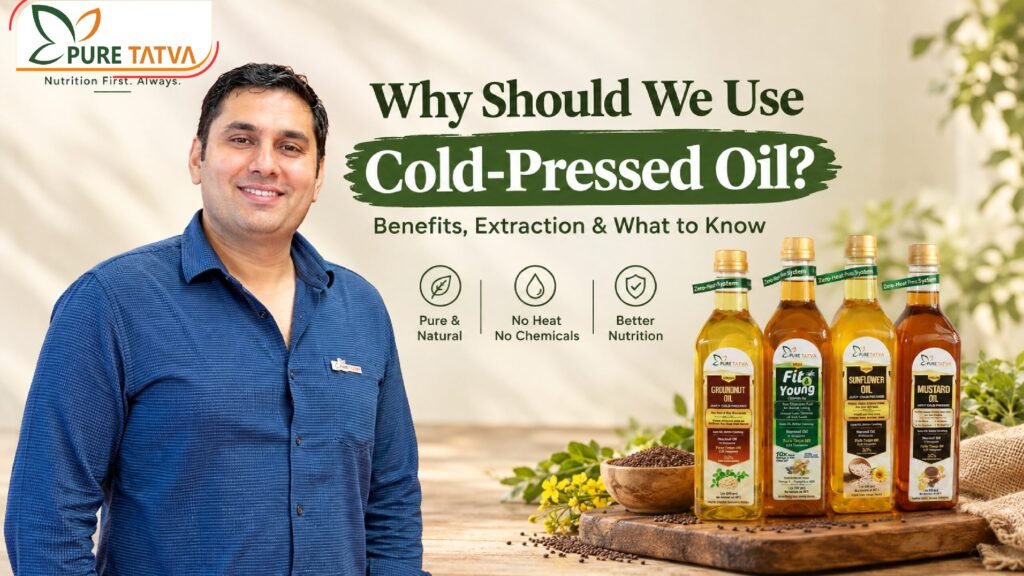
Why Should We Use Cold-Pressed Oil? Benefits, Extraction & What to Know
The main reason people choose cold-pressed oil is that it can be extracted mechanically with relatively little processing compared with refined oils. The objective is to obtain oil from the seed while avoiding unnecessary refining and excessive heat during extraction. But there is an important distinction: cold-pressed oil is not automatically healthier simply because the label says “cold pressed.” The quality of the seeds, extraction method, temperature, filtration, storage and the amount of oil used in cooking all matter. So, before choosing a cooking oil, the better question is not just “Is it cold pressed?” It is: “How was this oil actually extracted and processed?” What Is Cold-Pressed Oil? Cold-pressed oil is obtained by mechanically pressing oilseeds to release their naturally occurring oil. Unlike refined oils, the objective is generally to keep the processing comparatively simple. The oil may then be filtered and packaged without going through the same level of refining and deodorization. A simplified process looks like this: Oilseed → Mechanical pressing → Filtration → Oil The exact process varies between manufacturers and different types of oilseeds. The important point is that cold pressing focuses on mechanical extraction with minimal unnecessary processing. Why Is Cold-Pressed Oil Different From Refined Oil? To understand why people choose cold-pressed oil, it helps to understand what happens during refining. Refined cooking oil generally starts with crude oil extracted from oilseeds. The crude oil can then go through several processing stages depending on the type of oil and manufacturing process. These may include: These processes are used to improve characteristics such as colour, odour, acidity, stability and consistency. Refining is an established food-processing method and isn’t inherently something that should be described as “bad.” It can produce a consistent, neutral-tasting cooking oil. The difference is that a refined oil has undergone considerably more processing than an unrefined mechanically extracted oil. Why Does Heat Matter During Oil Extraction? One reason temperature gets discussed in cold-pressed oil production is that mechanical pressing can generate heat. Pressure, friction, equipment design, seed preparation, feed rate and operating conditions can all influence the temperature reached during extraction. Oilseeds naturally contain fats along with smaller quantities of compounds such as tocopherols and other phytochemicals. Heat is one factor that can influence the stability of some of these compounds. However, it would be incorrect to say that any exposure to heat destroys all the nutrients in an oil. The actual effect depends on the temperature, duration, oxygen exposure and the characteristics of the particular seed and oil. That is why I prefer a more practical principle: If unnecessary heat can be avoided during extraction, there is value in avoiding it. Is Every “Cold-Pressed” Oil Actually the Same? Not necessarily. This is one of the most important things consumers should understand. Two manufacturers can both use the words “cold pressed” while using different equipment, seed preparation methods and extraction conditions. Mechanical pressing itself creates pressure, and depending on the system, friction can also generate heat. So when buying cold-pressed cooking oil, don’t rely only on the front label. Ask the manufacturer: How is the oil extracted? What temperature is reached during extraction? Is water added? Is the oil refined or deodorized after extraction? How is it filtered? The answers can tell you much more about the product. What About Kachi Ghani and Wood-Pressed Oil? Kachi ghani and wood-pressed oils are traditional methods of oil extraction that have been used in India for generations. They involve mechanical crushing and pressing of seeds. As with other mechanical processes, friction can generate heat. Mustard oil is particularly interesting because its characteristic pungency is related to the chemistry of the mustard seed. When mustard seed tissue is disrupted, compounds such as sinigrin come into contact with the enzyme myrosinase, contributing to the formation of pungent compounds including allyl isothiocyanate. This is one reason mustard oil can have its characteristic sharp aroma and taste. Therefore: Pungency is not a simple test of purity. It is chemistry. The aroma, flavour and pungency of mustard oil can be influenced by the seed itself as well as its processing. Why Did Pure Tatva Develop a Zero Heat Press System? This question became particularly important to us while developing our mustard oil extraction process at Pure Tatva. Instead of asking how we could simply improve a conventional pressing method, we asked a different question: Can mustard oil be extracted without aggressively crushing the seed? This led us to develop what we call the Zero Heat Press System, inspired by an ancient Tibetan mechanism. The objective is to minimise unnecessary heat generation during extraction by avoiding conventional frictional crushing. Our process is based on a few simple principles: No added water during extraction. No chemicals during extraction. No conventional frictional crushing of the seed. Minimal unnecessary heat. Before pressing, we also work on removing excess moisture from the seeds. The oil is then filtered using our positive-pressure and capillary-action filtration approach. The result is our Virgin Juicy Cold Pressed Mustard Oil. Does Cold-Pressed Oil Automatically Mean Healthier? This is where I would avoid making an exaggerated claim. Cold pressed does not mean that an oil is a medicine. Cooking oils are concentrated sources of calories, and the quantity consumed matters. Your overall diet, lifestyle and the quality of the particular oil are also important. What cold pressing can offer is a different processing approach. An unrefined mechanically extracted oil generally undergoes less processing than a refined oil. This allows more of the naturally occurring characteristics of the seed to remain in the finished oil. But that doesn’t mean every cold-pressed oil is identical or that it is automatically the best choice for every person. What Are the Potential Advantages of Cold-Pressed Oil? When produced properly, cold-pressed oil can offer several processing-related advantages: 1. Less Extensive Processing Cold-pressed oils generally don’t require the same level of refining as refined oils. 2. Natural Characteristics of the Seed The oil can retain more of the naturally occurring characteristics of the original seed, including