Is Almond Oil the Same as Real Badam Rogan? Understanding the Difference
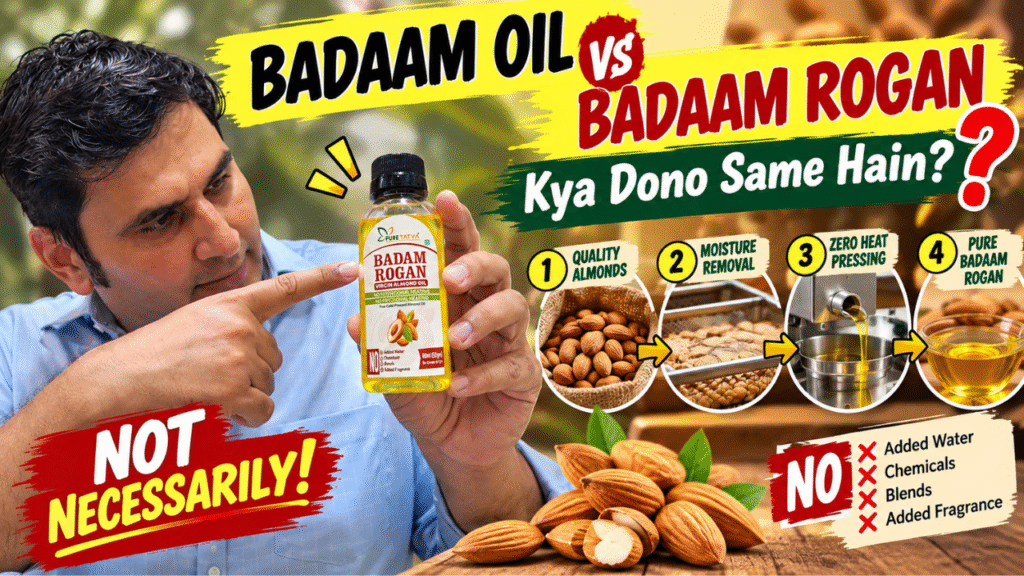
Almond oil and Badam Rogan are often used interchangeably, but are they always the same? Not necessarily. The quality and characteristics of almond oil depend on the almonds used, how they are prepared, and the method of oil extraction. Moisture conditioning and careful pressing can also influence the efficiency and consistency of the process. At Pure Tatva, the focus is on carefully selected almonds and a controlled extraction process designed to obtain Badam Rogan without intentionally applying heat during pressing. Understanding these steps helps explain why the way an oil is produced matters just as much as the raw material itself. What Is Badam Rogan? Badam Rogan is a traditional name commonly used for almond oil. It is obtained from almonds and is valued for its characteristic texture and composition. Almond oil contains predominantly monounsaturated fatty acids, particularly oleic acid, along with other fatty acids. Its precise composition can vary depending on the almond variety, growing conditions, and processing method. However, the name Badam Rogan alone does not tell you everything about an oil’s quality. To understand the finished product, it helps to look at the complete journey from almond selection to extraction. How Is Almond Oil Made? Understanding the Extraction Process The quality of almond oil depends on several factors, including the condition of the raw almonds, their preparation before pressing, and the extraction method. Here is how these stages contribute to the production of Pure Tatva Badam Rogan. Step 1: Selecting Quality Almonds Every good extraction process begins with its raw material. At Pure Tatva, carefully selected almonds form the starting point for Badam Rogan production. The almonds are cleaned and prepared for extraction to help ensure that unwanted foreign material does not enter the process. Raw material quality matters because the condition of the almonds can influence the oil’s flavour, aroma, fatty acid composition, and overall quality. Even the most carefully designed extraction process cannot compensate fully for poor-quality or improperly stored raw materials. That is why almond selection is an important first step. Step 2: Removing Excess Moisture Before Pressing Why can’t almonds simply be pressed immediately after cleaning? Because moisture content can influence the way oil-bearing seeds and nuts behave during mechanical extraction. Before pressing, almonds may require controlled moisture conditioning to bring them to a suitable condition for the equipment and process being used. Excess moisture can affect how the material behaves under pressure, the formation and handling of the pressed cake, and extraction efficiency. The ideal moisture level depends on the raw material and the particular pressing system. At Pure Tatva, moisture management is an important part of the preparation process. The objective is to prepare the almonds appropriately before they enter the press. It is worth noting that moisture removal should be controlled. Excessive drying is not automatically better, and the appropriate conditions depend on the almonds and the process requirements. Step 3: Hydraulic Pressing Without Intentional Heating Once the almonds have been prepared, the next stage is oil extraction. Pure Tatva uses a hydraulic pressing approach described as a Zero Heat Press System. In this process, pressure is applied mechanically to extract oil from the prepared almonds without intentionally introducing heat during pressing. Hydraulic pressing allows the material to be compressed under controlled pressure. As the pressure acts on the almonds, oil is released and separated from the remaining solid material. But does pressing without an external heat source mean that the temperature can never rise? Not necessarily. Mechanical pressing can generate some heat because of pressure, deformation, and friction within the material and equipment. Actual oil temperature depends on several factors, including operating conditions, pressing duration, equipment design, and the condition of the almonds. For this reason, the most meaningful way to substantiate a claim about room-temperature extraction is to monitor and document the temperature during the process. The distinction matters because cold pressing is not simply about avoiding a heating element; it is about managing the extraction conditions and the temperature the oil actually experiences. Step 4: Obtaining the Extracted Almond Oil As the prepared almonds are pressed, the released oil is collected. The resulting oil may then undergo appropriate settling, filtration, or other handling steps, depending on the production process. These steps can influence the oil’s clarity and the amount of suspended material remaining in the finished product. Good manufacturing practices also include protecting the oil from unnecessary exposure to air, light, moisture, and unsuitable storage conditions. Almond oil contains unsaturated fatty acids, which can be susceptible to oxidation. The objective is to maintain the quality of the oil throughout production and storage, not merely during pressing. Step 5: The Final Badam Rogan After extraction and any applicable finishing steps, the almond oil is ready for the next stage of quality assessment and packaging. At Pure Tatva, the emphasis is on the entire process: carefully selected almonds, appropriate moisture preparation, and controlled mechanical extraction. For us, the extraction method is an important part of the product story. It is not just about applying a label; it is about understanding the raw material and managing the steps that turn it into oil. What Makes Cold-Pressed Badam Rogan Different? Cold-pressed almond oil is produced through mechanical extraction under controlled temperature conditions, without intentionally using external heat to extract the oil. Compared with processes involving substantial heating or additional refining, cold pressing can help preserve certain characteristics of the original raw material. However, the outcome depends on the actual processing conditions, and the term alone does not guarantee a particular nutrient level, purity, or overall quality. When evaluating Badam Rogan, it is useful to consider the following: These considerations provide a more meaningful basis for understanding almond oil than relying on a product name alone. How to Choose Good-Quality Almond Oil If you are looking to buy Badam Rogan, there are a few practical checks worth making. Check the ingredients. Look for clear information about the oil’s source and whether any other ingredients have been added. Understand the extraction method.